Some excerpts from
Hello and welcome!
Welcome to all of you, but especially to those of you who are amazed that man was able to go to the Moon, that thermal or electric engines replaced slaves, that by flying you can go from one continent to another in a few hours and that we understand how it all works.
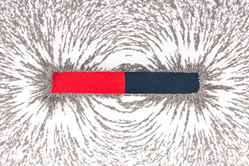
But perhaps, in this beautiful edifice that is classical physics, you have asked yourself the question of how objects interact at a distance. A nice name has been given to these interactions: magnetic, electric, electromagnetic or gravity fields. But is this name "fields" enough for you to understand what the reality of these interactions is?
Then, about a hundred years ago, you saw that, to explain anomalies in the world of the infinitely small and the infinitely large, two fantastically precise theories were added: quantum physics and general relativity.
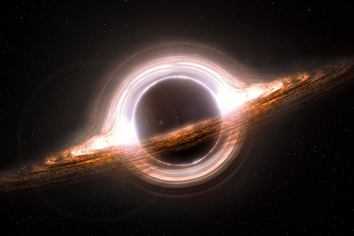
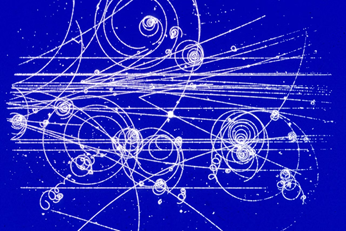
And then the universe around us began to bend, sometimes slightly but also sometimes so much that light can no longer leave these "black holes". And the atoms composed of a nucleus and electrons that revolve around them have given way to ghostly particles that are both everywhere and nowhere except at the moment when we look at them, such as in a bubble chamber.
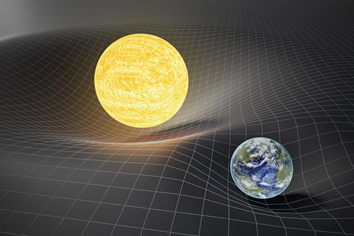
All this is accurate and calculable, but how can we represent it?
What if these complex concepts were represented in a simple way with angel hair?
What if this angel hair could make an electrostatic warp engine to visit the universe?
You are here on a version of the Introduction to the Quancha Theory that we have shortened so that it can be read completely in about twenty minutes while it takes about twice as much for the longer but much more complete version.
In these two versions we explain to you in a few words of common English some known facts of cosmology, classical physics, Einstein's relativity and quantum physics but without numbers or complex scientific reasoning. And we show that these real but difficult to understand facts could be explained simply by the Quancha theory.
And at the end of your reading you will be able to see and understand how this theory opens the door to the creation of motors that can move a vessel safely in space, faster than light.
If your only knowledge about general relativity comes from what you have seen in movies and if you have never been able to read an article on quantum computers to the end but this world seems interesting to you, then welcome to this version without numbers with a little quantum physics but not too much:
20min - Short introduction to the Quancha theory
If you have some time ahead of you or if you have distant or approximate knowledge of physics you should start directly with the long version because if you read the long version after the short version you will reread twice a few chapters almost unchanged, so click directly here:
1h - Long introduction to the Quancha theory
If the words "entropy", "contraction of space-time", "Planck time" and "quantum decoherence" are familiar to you, if you are not put off by some equations and if you want to discover a new theory that could bring together quantum and relativistic physics without changing them, then welcome to the full version here:
2h - The Quancha theory.
If you are a physicist and want to know in about ten minutes if reading this theory in extenso is worth two hours of your time, click here:
10min - The hyper summary.